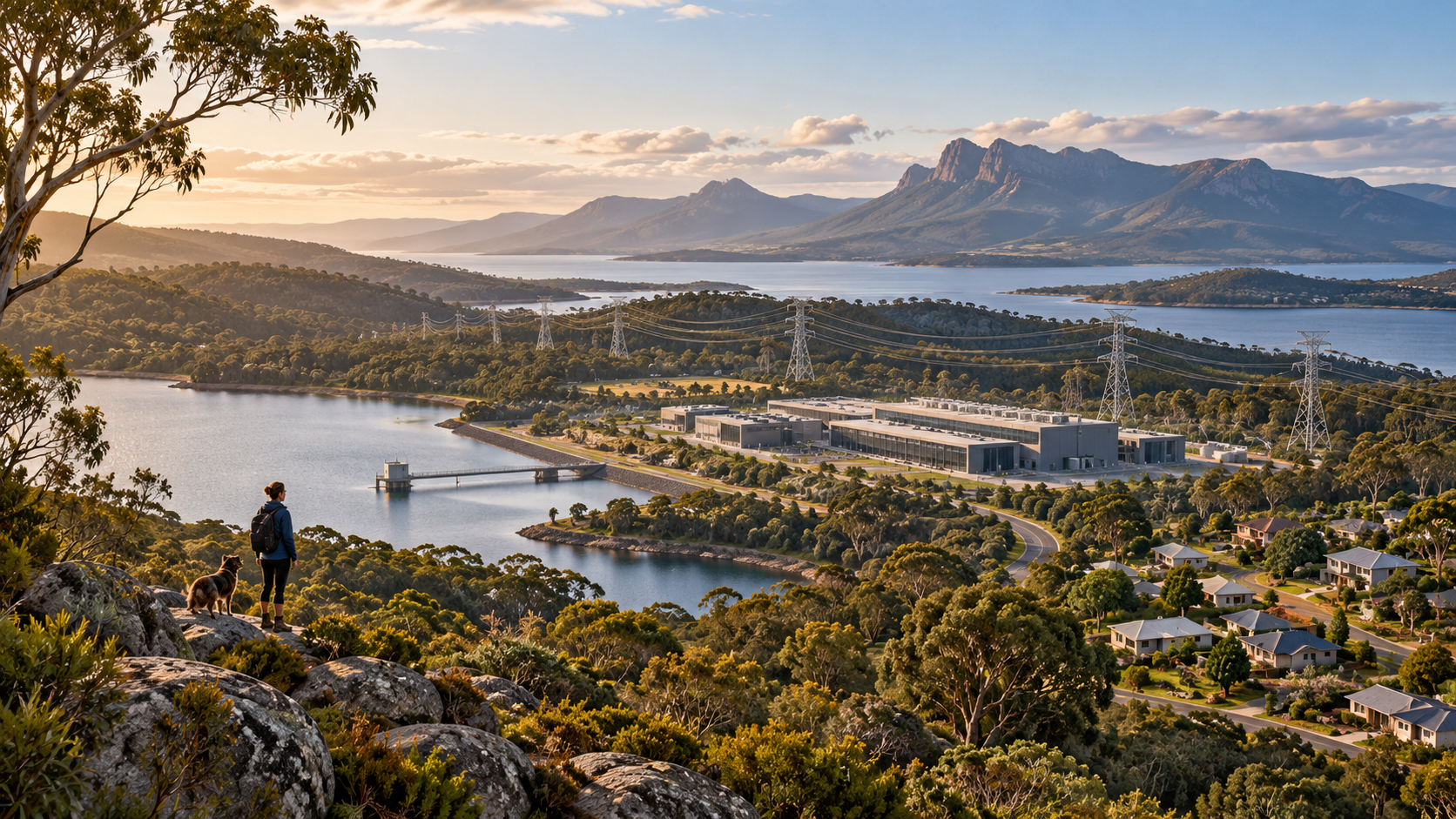
A new industry should be judged by what it delivers for the people who live beside it and help support the infrastructure it needs. For Tasmania’s expanding data-centre sector, that means answering practical questions about electricity, water, jobs and the right to be heard.
Tasmanians have until 11.59 pm on Monday 12 October 2026 to comment on the Government’s draft expectations for data centres and artificial intelligence infrastructure. Written submissions and an online survey are available through the official consultation page.[1]
What the draft would do
The draft expects developers to support additional renewable generation and storage, protect network reliability, minimise water use and avoid negative effects on existing customers’ energy and water infrastructure costs. It also seeks local economic benefits and early community engagement.[2]
However, the document explicitly describes itself as a non-statutory statement of policy. It does not establish a new approval system, change statutory assessment criteria or replace existing laws. Its purpose is to guide proponents through existing processes.[2]
That distinction deserves attention. A policy expectation can signal what government wants. Residents also need to know which commitments will become binding conditions or contracts, who will monitor them, and what happens if they are not met.
Look at the combined demand
This discussion extends beyond Firmus. ABC reported in September that six additional proposals were being explored, with proponents kept confidential. Their combined electricity demand would be at least 500 megawatts if they proceeded. They were at different stages of development; these were proposals, not six approved operating facilities.[3]
That makes a statewide assessment valuable. Looking at developments separately may not answer the public’s questions about their combined demands during dry periods, network constraints or delays to new generation. Neither a promise of cheaper power nor a prediction of higher household bills should be accepted without the assumptions and modelling behind it.
What meaningful safeguards could include
A stronger public framework could require a plain-language statement for each major development setting out its expected and maximum resource demands, supporting infrastructure, permanent employment and measurable community benefits.
- Electricity: identify the additional generation, connection works, delivery dates and who pays, including if demand grows or promised supply is delayed.
- Water: disclose the source, expected use, peak demand and arrangements during shortages.
- Neighbourhood impacts: publish independent assessments of noise, traffic and backup generation, together with a clear complaints process.
- Accountability: identify enforceable obligations, publish performance against them and explain consequences for non-compliance.
These are proposed safeguards for discussion, rather than a claim that the draft already imposes them. Requirements should reflect each project’s actual design and location.
Investment and public scrutiny can work together. Clear obligations would help communities judge proposals and give responsible developers greater certainty about what is expected. The consultation is an opportunity to ask for that clarity before Tasmania commits more of its shared infrastructure to a rapidly growing industry.
Have your say: Read the draft and submit feedback before the consultation closes on 12 October.
Sources and further reading
Information checked on 8 October 2026. Policy proposals in this article are presented for discussion.
Joomla HTML — open to copy
Use the article headline in Joomla’s Title field. Upload its matching image to images/tasmania-news-2026-10-08/, then paste the code below into the article’s HTML/source editor.